
Should You Pack or Buy School Lunch This Year? A Pediatric Dietitian's Take on 2026-27 Changes
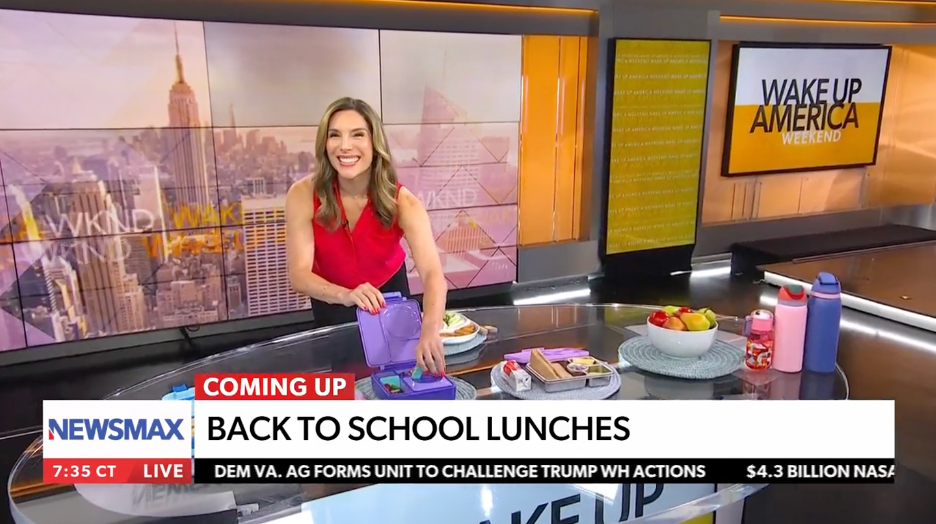
"Is school lunch a healthy option for my kid?" is one of the questions I hear more often during the early weeks of school. This year, there are some changes worth knowing about. School food has made significant progress in the last 10 to 15 years, and more changes are coming.
New sugar and sodium rules are phasing in at the federal level, three states have passed their own food laws, and here in New York, we're heading into year two of universal free meals.
None of these changes mean you need to rethink your family's lunch routine overnight, but knowing what's different can make the buy-or-pack decision a lot less stressful.
Keep in mind that there's no wrong answer here. Both options can be great, and many families blend the two. What matters most is that your child is getting the nutrition they need, when they need it, from foods that taste good to them.
In this post, I'll walk through what's changing at the federal and state level, what school lunch does well, where it still falls short, and how to think through whether buying, packing, or some mix of both makes sense for your kid this school year.
What's Changing With School Lunch Nutrition Standards in 2026-27
Under the National School Lunch Program (NSLP) meal pattern, federal school meals must include a balanced meal of fruits, vegetables, grains, protein, and milk, with limits on calories, saturated fat, and sodium. This provides the basic framework for school meals.
Highlights in the current pattern include that 80% of weekly grains must be whole grains, vegetables should come from several subgroups (dark leafy greens, red/orange vegetables, etc.), and saturated fat must be less than 10% of weekly calories.
What is new starting July 1, 2027: The rules around added sugar are getting stricter. Schools will continue to follow limits for added sugar in foods such as cereal, yogurt, and flavored milk, and a new overall limit will mean that no more than 10% of weekly calories from school meals can come from added sugars. Sodium limits will also decrease by 10% at breakfast and 15% at lunch.
So this year is the in-between year. Your child's tray will probably look similar to last year's at first, but cafeteria staff are already working on making changes that will take full effect in another 12 months.
How Arizona, California, and Nebraska Are Changing School Food Now
Three states decided not to wait on changes. Arizona's Healthy Schools Act takes effect this school year and bars schools from serving or selling foods that fall under its ultra-processed definition, which is based on 11 specific ingredients, several of which are synthetic dyes.
California's AB 1264, also known as the Real Food, Healthy Kids Act, will ban some synthetic dyes starting December 31, 2027, and will fully phase out certain flagged ingredients by 2029.
Nebraska also passed its own dye ban in 2026, naming Red 40, Yellow 5, Yellow 6, Blue 1, Blue 2, and Green 3, effective August 2027.
New York hasn't passed anything like this yet. Our headline change is still universal free meals, now in its second year, meaning every child gets breakfast and lunch at no cost regardless of income. The dye and additive laws are worth watching, particularly as more states are beginning to consider their own restrictions on food additives and dyes.
What School Lunch Gets Right
While the additives and sugar limits are an important ongoing conversation, an equally important point is that a school lunch is designed to bring several food groups together in one balanced meal. This is a very useful starting point for most children.
It means that a child who buys lunch is more or less guaranteed exposure to a vegetable, a protein, a grain, and dairy or a substitute, in the same tray, without a parent having to engineer it.
Cafeterias also put foods in front of kids that may never make it into a lunchbox. Beans, a rotating cast of vegetables, whole grains, a variety of fruits, and combinations some parents may not think to pack. Whether the child eats the food is a separate question, but the exposure itself is valuable, especially when you have a picky eater.
Where School Lunch Falls Short
A meal that clears federal nutrition standards on paper can still be a meal your child picks apart and eats only the bread roll from. School food is doing its best to meet the needs of thousands of kids with different allergies, cultures, palates, and schedules, which is a challenge.
Limited lunchtime makes it even harder. A student who has 11 minutes to get through the line, find a seat, open a milk carton, and actually finish their meal is not eating leisurely, and food waste studies on school cafeterias consistently report that food waste is an issue in schools.
Having certain foods served does not guarantee they’ll be eaten, which is why answering the question 'Is school lunch healthy?' isn't quite as simple as looking at the menu.
How to Read a School Lunch Menu Like a Dietitian
As a pediatric dietitian, when I look at a school menu, I'm not trying to decide whether every meal is perfect. I'm looking for a reasonable pattern across the week. I usually pay attention to three things:
Variety: Are the same vegetables showing up every day, or is there variety in the rotation?
Balance: What's being served alongside the entrée? A meal doesn't have to be perfect to offer a reasonable mix of foods.
Palatability: What will most kids eat off that tray? Are the options balanced, but also likely to appeal to children?
One more note: it is easy to compare a single school lunch to a single packed lunch, item for item. However, that comparison is often not the most useful. The better question is whether the dietary pattern of whatever your child is eating, school or home, has been well balanced over the course of the week.
Should My Child Buy or Pack Lunch?
There’s no one right way to approach school lunch. Some families buy lunch every day, and it works beautifully for them. It’s convenient, and having one less thing to think about first thing in the morning can be a huge help. Others pack lunches to accommodate a food allergy, a sensory issue, or a kid who won't eat what's offered that day.
And plenty of families find a balance between the two. Maybe their child buys lunch three days a week and brings lunch from home two days, or they choose school lunch on the days when there’s something they really enjoy. There’s no need to stick to one approach every day. The best choice is the one that helps your child get solid nutrition during their school day and that fits realistically into your family’s routine.
If Your Child Won't Eat School Lunch
If your child walks in the door every day saying they’re starving, it may not necessarily be the school lunch menu that’s the problem. It can help to ask a few simple questions, such as: What did they choose in the lunch line? Did they have enough time to eat? Did they actually get a chance to sit down before the bell rang? Sometimes the answer really is about the food, but other times, lunch may simply be rushed or distracting.
One easy strategy is to look over the school lunch menu together on Sunday. If Tuesday’s lunch is something your child knows they probably won’t eat, you can pack lunch that day and avoid the daily back-and-forth. A little planning ahead can make the whole school lunch routine feel easier for everyone.
If your child is picky, has a food allergy, or struggles with certain textures, I'd talk with the school's nutrition staff before deciding that school lunch won't work. You may have more options than you think. Most districts are more flexible than parents expect and can help provide some accommodations based on your child’s needs.
Free School Meals Don't Guarantee Kids Are Eating Them
Universal free meals solved the cost problem in New York, which is a meaningful win. The state reported that 2.7 million students had access to free breakfast and lunch last year, and 396 million meals were served statewide. The program saves families an estimated $165 per child in grocery costs each month.
But access is only part of the equation. For children to actually benefit, they also need to find enough of the food appealing in order to eat it, have enough time to finish, and feel comfortable sitting down to eat during the school day.
Research on universal meal programs shows participation climbing, along with some gains in diet quality and food security. However, participation is still affected by taste, age, and the appeal of the day's menu.
If you're a New York parent trying to decide whether to pack or buy this year, I'd take the pressure off the decision itself.
School lunch can be a genuinely good option. A packed lunch can also be a great option.
What matters most is the bigger picture: Is your child eating enough over the course of the day and week? And is lunchtime working for your family without turning into another daily battle?
The Bottom Line: Is School Lunch Healthy?
The 2026–27 school food changes are a step in the right direction, but many of them are still a year or more away. Arizona, California, and Nebraska are also worth watching as more states consider their own approaches to food additives and ultra-processed foods. For this school year, the federal sugar and sodium limits are still being phased in, so the full changes are not yet in place.
For now, try not to feel like you need to audit your child’s tray ingredient by ingredient or defend whichever lunch routine your family has chosen. Buying school lunch and packing lunch are both useful options, and many families mix the two depending on the day, the menu, and what works best for their child.
If your child is eating enough, getting a reasonable variety of foods over the course of the week, and lunchtime isn’t turning into a daily battle, you’re doing just fine. There’s no need to make school lunch more complicated than it needs to be.
If you are looking for lunch-packing inspiration, grab my e-guide for 8 Kid-Friendly Lunches or my blog posts, Packing Lunches for Picky Eaters and Ideas for School-Packed Lunches.
For more tips on feeding picky eaters, check out my FREE guide to reducing picky eating or enroll in my online course, Solve Picky Eating, which includes 12 self-paced short video lessons, downloadable guides, and checklists to support you along your journey of navigating picky eating.
And if you're looking for individualized nutrition support, I am also available for a virtual one-on-one consultation.
Thanks for reading!