
New Gluten Introduction Guidance for Babies at Risk for Celiac Disease
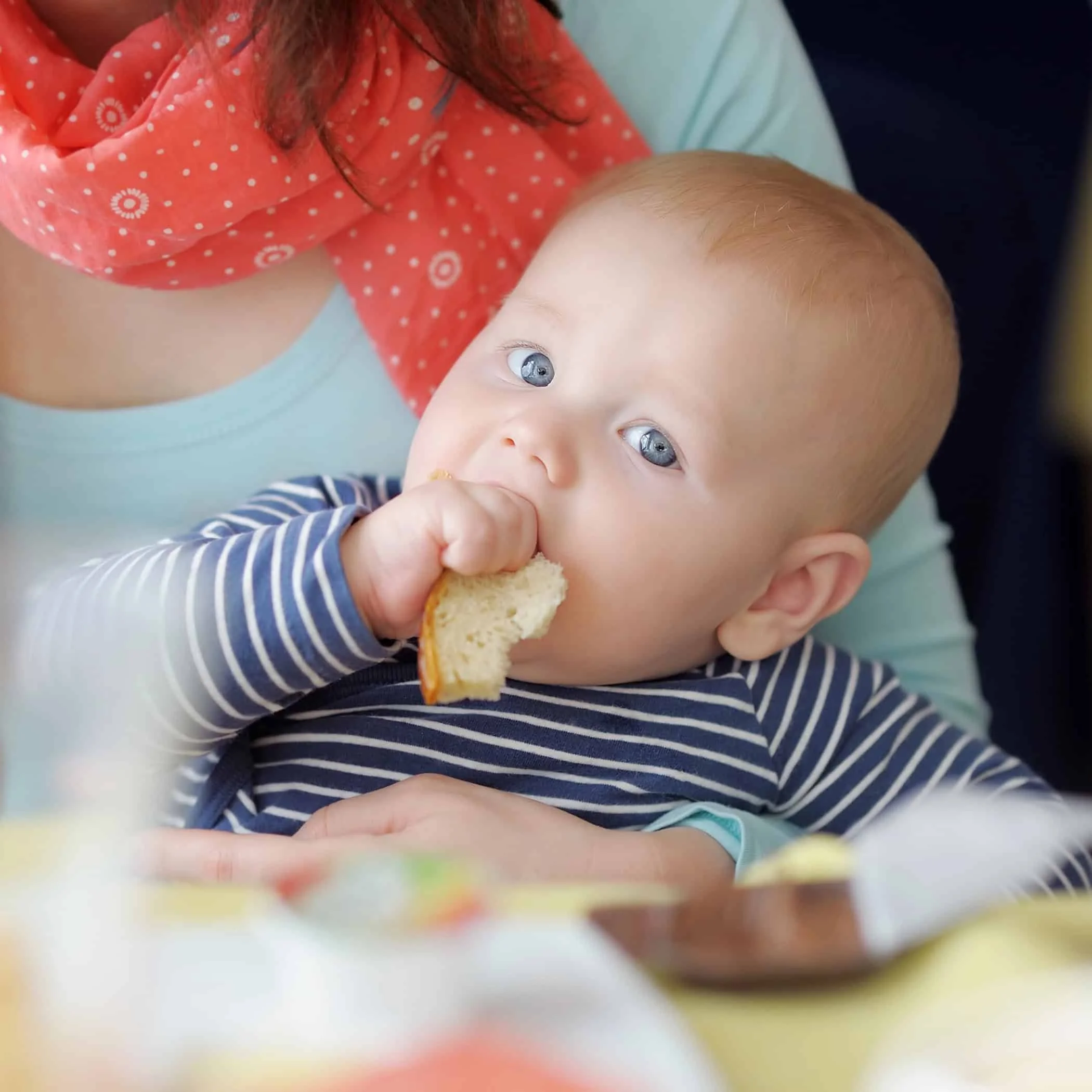
Feeding your baby in the first year comes with a lot of decisions, and gluten is one that tends to bring up a surprising amount of anxiety. Many parents still feel pressure to “get it right,” especially with concerns about celiac disease.
The good news is that the research has become much clearer over the past decade. What once felt like a narrow window with strict rules has now shifted into something far more flexible and reassuring.
Bottom line: current evidence shows no benefit to early or delayed gluten introduction. Offering gluten in moderate amounts during the typical window for starting solids is the recommended approach.
In this post, we’ll walk through the latest evidence on gluten introduction, explain what has changed in the recommendations, and give you simple, practical guidance you can actually use at home.
What Is Celiac Disease?
Celiac disease is an autoimmune condition in which consuming gluten, a protein found in wheat, barley, and rye, triggers an immune response that damages the lining of the small intestine. It develops only in people who carry certain genetic variants and affects roughly 1% of the general population worldwide.
While it is hereditary, having a family member with celiac disease does not guarantee a child will develop it, only that their genetic risk may be higher.
What the New Recommendations Actually Say
Now that you have a better understanding of celiac disease, you may be wondering whether there is anything you can do during those early feeding months to lower your child's risk.
The current consensus is refreshingly straightforward. According to the 2024 ESPGHAN (European Society for Pediatric Gastroenterology Hepatology and Nutrition) Position Paper on Early Diet and Coeliac Disease Risk, an update to the 2016 recommendations, gluten may be introduced between 4 and 12 months of age. Specific timing of gluten introduction does not affect a child’s cumulative risk of developing celiac disease.
The same guidelines confirm that breastfeeding, whether any amount, exclusive, or of any duration, does not reduce the risk of developing celiac disease. This represents a significant shift from older guidance that emphasized precise timing and breastfeeding as protective strategies.
For parents, this means there is much more flexibility than previously thought.
A Quick Look at How Recommendations Have Evolved
Earlier guidelines from ESPGHAN (2008) suggested introducing gluten between 4 and 7 months while breastfeeding. These recommendations were based on observational studies suggesting that both early and delayed introduction might increase risk.
However, two large randomized controlled trials, PreventCD and CELIPREV, significantly challenged those assumptions. Both showed that while timing may influence when celiac disease first appears, it does not change the overall likelihood of developing it over time.
A 2022 systematic review and meta-analysis, which formed a cornerstone of the updated 2024 ESPGHAN guidelines, confirmed that this body of evidence is consistent across multiple high-quality studies, with an important caveat: most trials enrolled higher-risk, European cohorts, so findings may not apply equally to all populations.
So, When Should You Introduce Gluten?
Gluten can be introduced at any point during the typical window for starting solids. For most babies, that means around 6 months of age, when they are developmentally ready (with some infants ready a bit earlier, always guided by the pediatrician).
There is no need to rush to introduce gluten early, and there is also no benefit to delaying it. The key is to follow your baby’s readiness cues and introduce gluten naturally alongside other foods.
Does Breastfeeding Affect Celiac Disease Risk?
This is one of the biggest changes in guidance. Older recommendations suggested that breastfeeding during gluten introduction could lower the risk of celiac disease. We now know that is not the case.
Breastfeeding remains incredibly valuable for many reasons, but the 2024 ESPGHAN position paper is clear: breastfeeding does not appear to influence whether a child develops celiac disease. This can be reassuring for families who are formula-feeding or who have already weaned.
What May Matter More: Gluten Quantity
While timing is no longer a major focus, researchers are paying closer attention to how much gluten children consume, and this may be the most practically important question for everyday feeding.
The landmark TEDDY study, published in JAMA in 2019, followed over 6,600 genetically at-risk children across clinical centers in Finland, Germany, Sweden, and the United States. It found that children who consumed higher amounts of gluten during their first five years of life had a greater risk of developing celiac disease autoimmunity, even among those who were already genetically predisposed.
What makes this especially relevant for parents of toddlers: a 2023 mini-review in Frontiers in Immunology found that celiac disease incidence tends to peak during the second and third years of life, which is the same window when higher gluten intake shows the strongest associations with disease risk. In other words, how much gluten a child eats during the toddler years may matter.
None of this means gluten should be avoided; it shouldn't be! Rather, it supports a gradual, moderate approach that continues beyond the initial introduction phase, particularly for children with a known family history of celiac disease.
This is also still an active area of research. The GRAIN trial is an ongoing randomized trial investigating whether a gluten-reduced diet in early childhood can lower the risk of celiac disease autoimmunity. Its findings could meaningfully shape future guidance on gluten quantity in the coming years.
What This Looks Like in Real Life
For most families, this approach is simple and manageable. You can introduce gluten-containing foods once your baby has started solids.
As a pediatric dietitian and mother of three, this is exactly how I recommend approaching gluten at home. There’s no special schedule or pressure, just a gradual introduction alongside other familiar foods.
This might look like offering:
Wheat-based baby cereals
Soft pasta pieces
Start by offering a tiny amount a couple of times a week, and over the course of a few weeks, gradually increase the serving size and frequency. As your child moves into the toddler years, gluten-containing foods will likely remain staples, and that's completely fine. But it's worth being intentional about making gluten-containing grains don't quietly become the only grains in the rotation. This is easier than it sounds, but it does require a little thought, because toddler carb cravings are relentless and for good reason.
Toddlers are biologically wired to seek out carbohydrate-dense foods. Research shows that a young child’s brain consumes roughly twice as much glucose as an adult brain, creating a genuine physiological pull toward crackers, cereals, cookies, and bread. Left on autopilot, gluten-containing grains can easily dominate simply because they're convenient, familiar, and enthusiastically accepted.
Intentionally rotating in gluten-free grain and carbohydrate options alongside gluten-containing foods is a simple, low-stress way to keep gluten intake moderate without any rules or restrictions. Some easy options to work into meals and snacks regularly:
Rice: rice cakes, plain steamed rice, rice-based pasta
Oats (certified gluten-free): oatmeal, overnight oats, homemade oat-based muffins
Corn: corn tortillas, polenta
Quinoa: mixed into meals, served as a simple side, or the delicious Pizza Ramekins with Quinoa Crust
Millet: porridge-style or added to soups
Buckwheat: buckwheat pancakes or noodles
Potatoes and sweetpotatoes: fries, mashed, roasted, or as a snack with dip
The goal isn't to avoid gluten-containing grains. Pasta, bread, crackers, and cereals absolutely still have a place at the table. It's simply about variety: making sure the grain rotation is broad enough that gluten-containing options aren't doing all the heavy lifting, particularly during a stage of life when carbs are in especially high demand.
What If Your Child Is at Higher Risk?
If you have a first-degree relative with celiac disease, your child may have a higher genetic risk. Even in these cases, the recommendations remain the same: introducing gluten earlier or later does not change whether a child will ultimately develop celiac disease.
Studies show that earlier gluten introduction may mean that celiac disease and its associated symptoms present earlier, but the total risk over time remains unchanged. Families can follow the same general feeding approach, without needing special timing strategies. Where quantity is concerned, a moderate approach to gluten intake (outlined above) may be especially prudent for genetically at-risk children based on the TEDDY data.
The Bottom Line: What This Shift Means for You
This updated guidance takes a lot of pressure off families. There is no longer a need to carefully time gluten introduction, count grams of gluten in each serving, or coordinate gluten introduction with breastfeeding.
Instead, you can focus on the bigger picture: offering a variety of foods, responding to your baby’s cues, and building a positive relationship with eating, which are all factors that play a much larger role in long-term health than the precise timing of gluten.
The newest recommendations reflect a major shift in how we think about gluten introduction:
Timing of gluten introduction (between 4–12 months) does not determine celiac disease risk
Breastfeeding does not determine celiac disease risk either
What may matter more is avoiding very large amounts of gluten early on, while still including it regularly as part of a balanced diet
For genetically at-risk children, a moderate and gradual approach is especially reasonable given current evidence
For parents, this means more flexibility, less stress, and a clearer path forward during an already busy stage of life.
If you are looking for more help with starting your baby on solids and introducing allergens, check out my FREE allergen introduction + starting solids guide, or better yet, my book, Safe and Simple Food Allergy Prevention: A Baby-Led Feeding Guide to Starting Solids and Introducing Allergens with 80 Family-Friendly Recipes.
It includes a complete plan for allergen introduction, 8 weeks of baby-led feeding meal plans, a guide to starting solids and baby-led feeding based on the latest research, and 80 family-friendly recipes. Grab your copy here!
And if you need personalized guidance or have specific concerns, schedule a virtual one-on-one consultation with me to get expert support tailored to your baby’s nutritional needs.
Thanks for reading!