
Cyclospora Symptoms and Hydration: A Dietitian's Guide to the 2026 Outbreak
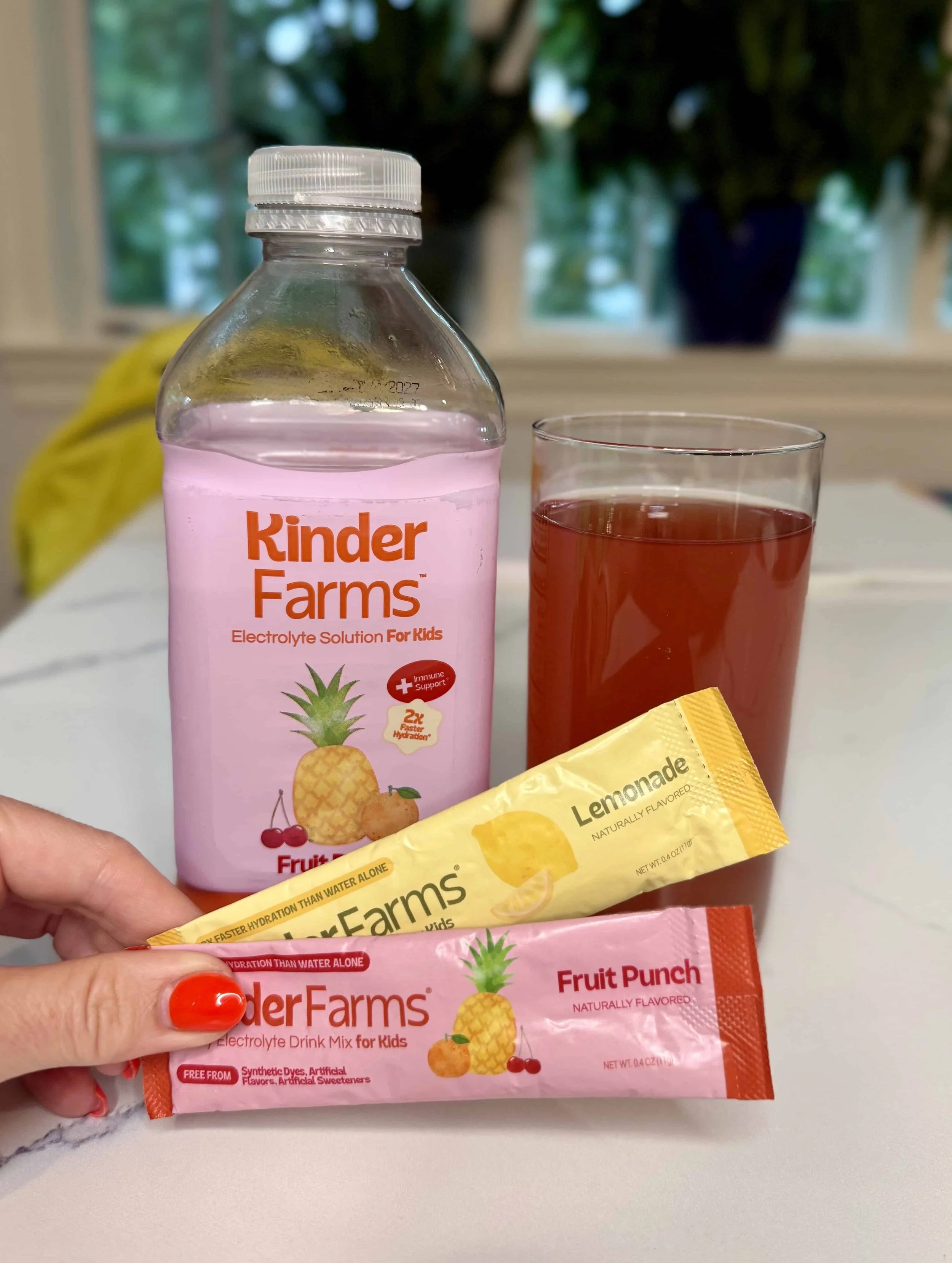
This post is sponsored by KinderFarms. All opinions and clinical recommendations are my own.
I got sick with Cyclospora over Memorial Day weekend, before most people had even heard of it. It was brutal, with weeks of symptoms that eased off just enough to make me think I was recovering, then came back again.
I wrote about it once already, in a previous article if you want to read more, when it looked like the outbreak might be winding down. Unfortunately, it turned into the worst Cyclospora outbreak our country has ever seen.
All this to say, the current Cyclospora outbreak isn’t yet entirely over; shortcomings in our food safety systems indicate that we may continue to see more outbreaks, and it’s more important than ever to know what the symptoms of cyclosporiasis look like and how best to manage them.
So here is what I know now: what the illness actually feels like, how long it lasts, and why staying hydrated through it takes more than water.
Quick answers
Cyclospora symptoms include watery diarrhea, loss of appetite, weight loss, cramping, bloating, gas, nausea, and fatigue, and they characteristically come and go rather than steadily improving.
It doesn't resolve on its own quickly. Untreated, cyclosporiasis can run from several days to a month or more. With the right antibiotic, most people improve within a few days.
It needs a specific test. Standard stool panels don't detect Cyclospora. You have to ask for it by name.
Water alone isn't enough when you're losing significant fluid to diarrhea. An oral rehydration solution replaces the sodium and potassium you're losing and uses glucose to help your body absorb them.
How many Cyclospora cases are there in 2026?
Outbreak figures last updated: August 25, 2026
As of August 25, 2026, the Centers for Disease Control and Prevention (CDC) has confirmed 17,180 laboratory-confirmed cases of cyclosporiasis acquired in the United States, across 47 states plus the District of Columbia and Puerto Rico, with 922 hospitalizations and 2 deaths. Another 11,844 cases are still under investigation or awaiting lab confirmation.
For scale, the entire May-through-August season last year produced 1,180 cases. This year is running roughly thirteen times that, and the season isn't finished. The CDC also notes that reporting lags behind actual infections, so the count will keep climbing for a while even if new infections have already slowed.
Confirmed cases span ages 1 to 99, with a median age of 46. That tells you something useful: this is a household illness, hitting parents and grandparents right alongside their kids.
Where did the Cyclospora outbreak come from?
The CDC and the Food and Drug Administration (FDA) have linked a major multistate outbreak to iceberg lettuce sourced from central Mexico by Taylor Farms de Mexico, which recalled the product across both retail and food-service distribution. Traceback investigations and patient interviews drove that link, as roughly nine in ten interviewed patients reported eating iceberg lettuce.
The lettuce-associated outbreak accounts for a substantial share of the national total, but not all of it. It's worth keeping the two numbers distinct.
Has anyone died from Cyclospora?
Two deaths connected to this outbreak have been reported, both in Michigan. Both individuals had underlying medical conditions that complicated their illness. Deaths from cyclosporiasis are very rare, which is part of what makes this outbreak so unusual in scale.
What are the symptoms of Cyclospora?
The most common symptoms of cyclosporiasis are:
Watery diarrhea, sometimes explosive
Loss of appetite
Weight loss
Cramping and bloating
Increased gas
Nausea
Fatigue
What sets Cyclospora apart from other parasites and stomach viruses is the pattern. Symptoms arrive, ease off just enough that you think you're recovering, then return. That wax-and-wane rhythm is the most disorienting part of it, and it's the detail that should prompt you to ask about testing.
Nobody was talking about Cyclospora when I got sick, so I assumed food poisoning or a virus. My doctor assumed the same, and I tested negative for all the usual suspects. It took weeks to land on the right answer.
How long does Cyclospora last?
Without treatment, cyclosporiasis can last from several days to a month or longer, with symptoms improving and returning along the way, which makes it easy to assume you're getting better when the infection is still there.
With treatment, the picture changes quickly. Symptoms usually improve within a few days of starting the right antibiotic, and the infection is fully cleared after a standard seven-to-ten-day course. I felt a substantial difference within hours of my first dose.
How is Cyclospora treated?
Trimethoprim-sulfamethoxazole (TMP-SMX) is the treatment of choice.
The catch is diagnosis: standard stool panels do not detect Cyclospora. It requires a specific test. If you have persistent or recurrent watery diarrhea, ask your healthcare provider whether testing specifically for Cyclospora is appropriate. Don't wait it out.
Is it safe to eat lettuce and fresh produce during the outbreak?
Yes, with one exception. The specific product to avoid is the recalled Taylor Farms de Mexico iceberg lettuce. Per the CDC, the best-by dates on the recalled products have passed, and they should no longer be on shelves or in restaurants.
You do not need to avoid all lettuce or all fresh produce. Stay current with CDC and FDA alerts in case new products or sources are identified, and:
Wash fresh produce under clean running water, including anything you plan to peel
Do not use soap or detergent on produce
Remove the outer leaves of leafy greens where you can
Cook produce when possible; heat can kill the parasite
If you're at increased risk of infection, lean toward cooked produce and frozen or canned options. I go deeper on this in my full guide to serving produce safely during the outbreak.
Why doesn't drinking water help with diarrhea?
Diarrhea costs you both fluid and electrolytes — sodium, potassium, and chloride. Replacing the fluid matters, but plain water doesn't replace what's going out with it. That's why "just drink more water" is incomplete advice once fluid loss becomes significant.
The part most people miss is glucose. Sodium absorption in the small intestine is coupled to glucose transport: glucose pulls sodium across the intestinal wall, and water follows the sodium. This is precisely why oral rehydration solutions are formulated to a specific glucose-to-sodium ratio rather than just being salty water with a nicer label. An oral rehydration solution (ORS) is a drink engineered around that ratio, and it's what the evidence supports when diarrhea is causing real fluid loss.
Oral rehydration solution vs. sports drinks, juice and broth
| Drink | Sodium | Glucose | Suited for significant fluid loss due to high heat exposure, sports, travel, or diarrhea |
|---|---|---|---|
| Oral rehydration solution (ORS) | Formulated for fluid loss | Balanced to the sodium | Yes — built for this |
| Sports drinks | Often too low | Often too high | Not ideal — sugar high, sodium low |
| Juice and soda | Negligible | Very high | No — often hard to tolerate on an irritated gut |
| Broth | Yes | None | Partly — no glucose to drive absorption |
| Plain water | None | None | Not on its own |
What should you drink when you have diarrhea?
When you're losing a lot of fluid, an oral rehydration solution is the right tool, because it replaces fluid and electrolytes together in the glucose-to-sodium ratio described above.
I used KinderFarms Electrolyte Solution, an oral rehydration solution, to stay hydrated through the weeks I was sick. It's designed specifically for kids — particularly in the flavors kids will actually accept — but it's effective for adults too, and on days when I had no interest in eating or drinking, it was one of the only things I could reliably keep sipping.
Both the KinderFarms Electrolyte Solution and the KinderFarms Electrolyte Drink Mixes contain electrolytes along with dextrose, a simple sugar chemically identical to the glucose used in hospital IV drips for hydration. Both meet the ORS formulation. Neither contains artificial dyes, artificial sweeteners, or artificial flavors, and both include added zinc. They're designed to hydrate twice as fast as water alone, and they come in a range of flavors. Lemonade is my favorite among the liquid solutions, alongside fruit punch, orange, strawberry, watermelon citrus, and grape. The drink mix packets are easy to keep in a bag with you.
One important thing to be clear about: KinderFarms Electrolyte Solution supported my hydration, but it does not treat the infection. Anyone with suspected Cyclospora needs a medical evaluation and a specific stool test, not a hydration plan on its own.
Can adults drink electrolyte drinks made for kids?
Yes. An electrolyte drink designed for children can be entirely appropriate for an adult. What matters is what's in the product — the formulation and what it's intended to do — and an ORS is an ORS regardless of who the flavors were chosen for.
Which KinderFarms format suits which age?
| Format | Ages | Zinc | Sugar as Dextrose |
|---|---|---|---|
| Electrolyte Solution (liquid) | 1 and up | 4.2 mg | 4g to 8g per serving |
| Electrolyte Drink Mix (powder) | 2 and up | 4.2 mg | 5g to 6g per serving — 75% less than the leading sports drink (about 21g) |
| Orange Citrus + Plus Elderberry, Vitamin C, & Zinc (Dietary Supplement) Drink Mix (dietary supplement) | 4 and up | 25 mg | 6g per serving |
KinderFarms is available at Amazon and Walmart, and directly from kinderfarms.com.
If your baby is under two years old, talk to your pediatrician before giving any electrolyte solution. For the Orange Citrus Dietary Supplement Drink Mix in particular, if you are pregnant, nursing, or taking medication, consult your doctor before using. Always consult with your pediatrician before giving your child dietary supplements. The Orange Citrus Dietary Supplement Drink Mix is not for use by children under 4 years of age.
How do you stay hydrated when diarrhea makes it hard to drink?
As a pediatric dietitian and a mom of three, here's what actually works when you or your kids can't face drinking:
Take small sips, often, rather than gulping a full glass. Large volumes tend to come straight back up when you're nauseated.
Serve fluids cold. Chilled drinks are usually easier to tolerate.
Freeze it into popsicles if you've got a sick kid refusing to drink. It works more often than you'd think.
Don't wait until you're thirsty. Sip anyway, and use the stretches when you feel better to catch up.
Eat whatever you can tolerate when you feel hungry. Long stretches without food contribute to weight loss and exhaustion.
Track urine output and color, not just how much you think you drank.
Add hydrating foods, like cucumber, tomato, strawberries, cantaloupe, applesauce, watermelon.
What are the signs of dehydration that need a doctor?
Call your healthcare provider promptly for any of the following:
Little or no urine output, or dark urine
No wet diaper in six to eight hours for an infant or toddler
No tears when crying
Dizziness or lightheadedness on standing
Repeated vomiting that won't let any fluid stay down
Vomiting, fever, or diarrhea continues beyond 24 hours or needs exceed 2 liters per day
If the person who's sick is an infant, an older adult, pregnant, or immunocompromised, they may be at higher risk of complications from dehydration. Don't try to wait it out — check in with a provider.
Do parasite cleanses or detox teas treat Cyclospora?
No. Parasite cleanses, detox teas, and coffee enemas do not treat Cyclospora. These non-evidence-based approaches can cause real harm, including dehydration and exactly the electrolyte imbalances you're trying to avoid.
Cyclosporiasis is treated with a specific antibiotic, prescribed after a specific test.
What to take away
Three things worth carrying with you:
Cyclospora symptoms come and go over weeks — improvement isn't the same as recovery.
Standard stool panels miss it. Ask your provider to test for Cyclospora by name.
When diarrhea is causing significant fluid loss, reach for an oral rehydration solution rather than water alone.
I'm grateful I had access to the care I needed, and I've been feeling well for a while now. If this saves someone else a few weeks of guessing, it was worth writing!
For more practical feeding guidance for babies and kids, browse the blog, find me on Instagram, or subscribe to my newsletter. And if you're looking for personalized nutrition support, I'm currently accepting new clients in my virtual private practice.